
Bulging Disc: Symptoms, Causes, Treatment and Recovery
A bulging disc is a common spinal finding that occurs when an intervertebral disc extends beyond its usual boundary. It can affect the neck or lower back and may be identified during an investigation for back pain, neck pain, or nerve-related symptoms.
However, a bulging disc does not always cause pain. Some people have disc bulges visible on an MRI without experiencing any noticeable symptoms, while others develop discomfort, stiffness, tingling, or pain that travels into an arm or leg.
Understanding what a bulging disc means, how it differs from a herniated disc, and which treatment options may help can make it easier to decide what to do next.
At Wave Chiropractic & Wellness in Toowoomba, Queensland, people experiencing musculoskeletal pain can explore appropriate assessment and care options. Treatment suitability depends on individual symptoms, examination findings, and whether additional medical investigation is needed.
This guide explains bulging disc symptoms, common causes, L5–S1 disc bulges, treatment options, and what scientific research says about recovery.
What Is a Bulging Disc?
A bulging disc occurs when an intervertebral disc extends beyond its normal outer margins, often across a relatively broad area of the disc circumference.
Spinal discs sit between the vertebrae and help distribute mechanical loads while allowing the spine to move. Each disc contains a soft inner region, called the nucleus pulposus, surrounded by a tougher outer layer known as the annulus fibrosus.
Over time, age-related changes can affect the structure and flexibility of these discs. A disc may then extend beyond its usual boundary, sometimes without causing any symptoms.
A bulging disc is not necessarily the same as a herniated disc. A bulge generally involves a broader extension of the disc, whereas a herniation describes more localised displacement of disc material.
Importantly, the word bulging describes an anatomical finding rather than automatically indicating an injury that needs treatment. The clinical significance depends on whether the finding matches the person’s symptoms and examination results.
Read more about slipped discs, their symptoms, and treatment.
What Causes a Bulging Disc?
Bulging discs can develop through a combination of age-related changes, physical loading, and individual health factors. In many cases, there is no single identifiable cause.
Age-Related Changes
As people get older, spinal discs can lose some of their water content and flexibility. Changes in the disc’s structure may make bulging more likely.
These changes are common and do not necessarily indicate that the spine is damaged or that treatment is required.
Repetitive Lifting and Bending
Activities involving repeated lifting, bending, or twisting place mechanical demands on the spine. Such activities may aggravate symptoms in someone with an existing disc abnormality, although they cannot always be identified as the direct cause.
Prolonged Sitting and Physical Inactivity
Long periods in one position can aggravate discomfort in some people with back or neck pain. Reduced physical activity may also affect strength and general physical capacity.
However, sitting alone does not establish the cause of a bulging disc. Regular movement breaks and gradually increasing activity can help support general musculoskeletal health.
Previous Spinal Injuries
Previous injuries or existing degenerative changes may contribute to disc abnormalities. Nevertheless, the presence of a bulge on imaging does not automatically mean a previous injury has caused it.
Maintaining regular physical activity, developing strength gradually, and using sensible lifting techniques may support spinal health, although these measures cannot guarantee prevention.
What Are the Symptoms of a Bulging Disc?
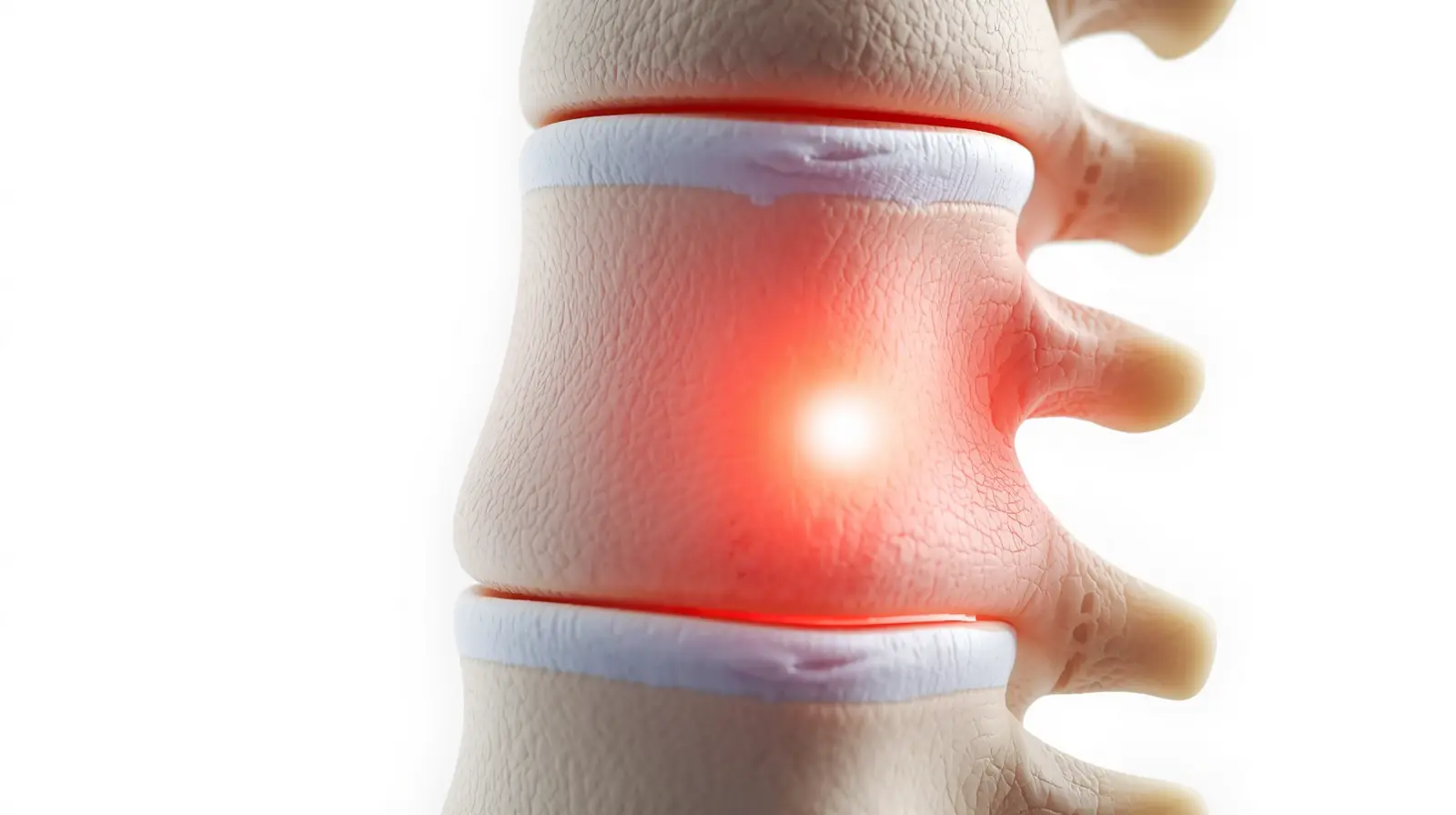
Bulging disc symptoms depend on the location of the disc, the surrounding structures, and whether a nearby nerve is irritated or compressed.
Some people experience no symptoms at all. Others develop localised discomfort or symptoms that extend into an arm or leg.
1. Lower Back Pain
A bulging disc in the lumbar spine may be associated with lower back pain or stiffness. Discomfort can sometimes become more noticeable during bending, lifting, or prolonged periods in one position.
However, lower back pain has many possible causes, including muscle strains, joint problems, and other spinal conditions. A disc bulge on its own does not confirm the source of pain.
Read more about lower back pain and its possible causes.
2. Pain That Travels Into the Leg
If a lumbar disc bulge affects a nearby nerve root, symptoms may extend into the buttock, thigh, calf, or foot.
Some people describe the sensation as sharp, burning, shooting, or electric. Tingling, numbness, or weakness may also occur when nerve function is affected.
This pattern can be associated with sciatica, although sciatica can develop for reasons other than a bulging disc.
Learn more about sciatica pain and related symptoms.
3. Neck Pain and Shoulder Discomfort
A cervical disc bulge affects a disc in the neck. Depending on its location and whether a nerve is involved, symptoms may include neck discomfort, shoulder pain, or pain that extends into an arm.
A disc bulge in the neck may also be present without symptoms. Persistent or worsening pain, particularly when accompanied by changes in sensation or strength, warrants assessment.
For information about local care options, visit Wave’s neck and shoulder pain service.
4. Tingling, Numbness or Weakness
When a disc abnormality affects nerve function, a person may experience pins and needles, altered sensation, numbness, or muscle weakness.
New or progressive weakness requires prompt medical assessment. Symptoms involving balance, walking, or coordination may also indicate a more significant neurological problem.
What Is an L5–S1 Disc Bulge?
An L5–S1 disc bulge affects the disc between the fifth lumbar vertebra (L5) and the first sacral vertebra (S1). This is the lowest intervertebral disc in the lumbar spine.
Because this region participates in everyday movements such as bending, lifting, and walking, abnormalities at L5–S1 may be identified during investigations for lower back pain.
However, an L5–S1 disc bulge does not necessarily cause symptoms.
Common L5–S1 Disc Bulge Symptoms
Depending on the anatomical findings, symptoms may include:
- Lower back discomfort.
- Pain extending into the buttock or leg.
- Tingling or numbness in part of the leg or foot.
- Muscle weakness when a relevant nerve root is affected.
- Discomfort during certain movements or activities.
A disc bulge at L5–S1 should not automatically be assumed to be the cause of leg pain. Clinical assessment is necessary to determine whether the imaging finding matches the person’s symptoms.
Does an L5–S1 Disc Bulge Need Surgery?
No. Surgery is not automatically required for an L5–S1 disc bulge.
Many people can manage symptoms without surgery, depending on the diagnosis and severity. Treatment may involve activity modification, appropriate exercise, rehabilitation, and symptom management.
Surgery may be considered in selected cases involving persistent disabling symptoms or significant nerve compression. Emergency neurological symptoms require urgent assessment.
Bulging Disc vs Herniated Disc: What Is the Difference?
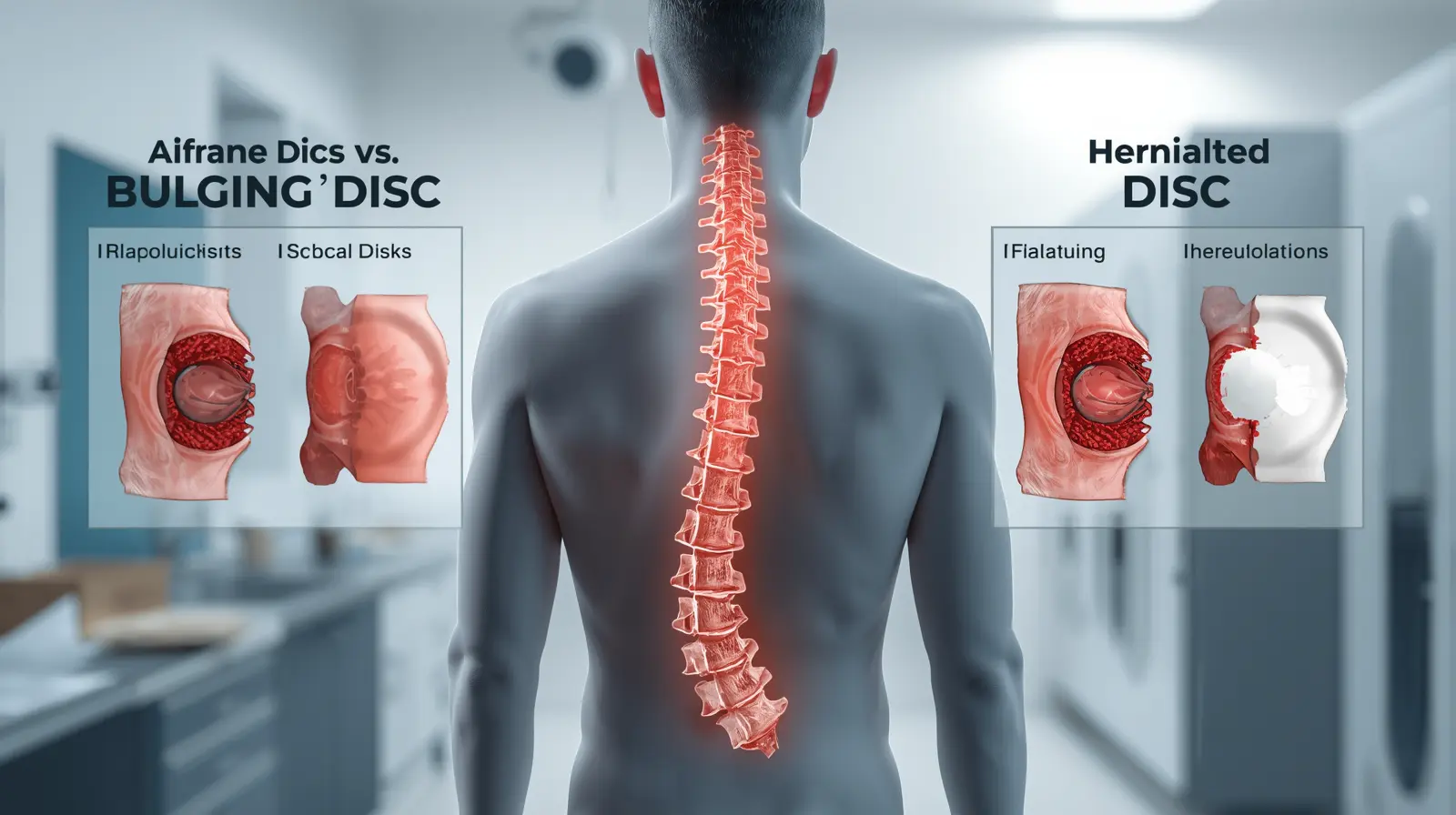
A bulging disc and a herniated disc describe related but distinct structural findings.
| Feature | Bulging disc | Herniated disc |
|---|---|---|
| Disc shape | Generally extends beyond its margins over a broader area | Involves more localised displacement of disc material |
| Outer disc layer | May remain intact | May be weakened or disrupted, depending on the type of herniation |
| Symptoms | May cause no symptoms or may be associated with pain | May cause no symptoms or may affect nearby nerves |
| Treatment | Depends on symptoms and clinical findings | Depends on symptoms, neurological findings, and the type of herniation |
The terms can sometimes be used inconsistently in everyday conversation, so imaging reports should be interpreted in context.
Bulging Disc Herniated Disc Symptoms: Can They Be the Same?
Yes. Both conditions may be associated with back pain, neck pain, radiating pain, tingling, or numbness if nearby nerves are affected.
Neither condition necessarily causes symptoms, and the size or appearance of a disc abnormality does not always correlate with pain severity.
For a more detailed comparison, read Wave’s herniated disc guide.
How Is a Bulging Disc Diagnosed?
Diagnosis usually begins with a clinical history and physical examination. A healthcare professional may ask where the pain occurs, when it started, which activities aggravate it, and whether there are any changes in sensation or strength.
The examination may assess:
- Spinal movement and functional limitations.
- Muscle strength and sensation.
- Reflexes and signs of nerve irritation.
- Walking and coordination when relevant.
- Previous injuries and medical history.
Is an MRI Necessary?
Not always. Many cases of back or neck pain can initially be assessed without imaging.
An MRI may be considered when symptoms persist, significant nerve involvement is suspected, or the results are likely to change treatment decisions.
Disc bulges are also found in people who have no back pain. Therefore, a scan finding should not be treated as proof that the bulge is causing symptoms.
A healthcare professional can help determine whether further investigation is appropriate based on the overall clinical picture.
What Is the Best Bulging Disc Treatment?
There is no single treatment that is best for every person with a bulging disc. The appropriate approach depends on the symptoms, the affected spinal region, the examination findings, and whether nerves are involved.
1. Activity Modification
For uncomplicated back pain, gentle activity is generally preferable to prolonged bed rest.
Walking, changing positions regularly, and temporarily reducing activities that significantly aggravate symptoms may help maintain mobility.
Avoid forcing movements that increase radiating pain, numbness, or weakness. If symptoms worsen or normal activities become difficult, seek professional advice.
2. Exercise and Physiotherapy
A physiotherapist may recommend an individualised exercise programme to improve mobility, strength, and everyday function.
Depending on the assessment, this may include:
- Gradual strengthening exercises.
- Mobility and movement-control exercises.
- Walking or other tolerated aerobic activities.
- Functional rehabilitation.
- Guidance on returning to work and sport.
Exercise should be selected according to the person’s symptoms and physical capacity. No single stretching routine can correct every disc bulge.
Read more about back stretching exercises for lower back pain.
3. Pain Management
Some people benefit from temporary symptom-management strategies, such as heat or cold packs.
Medication may also be considered, depending on individual circumstances. Speak with a doctor or pharmacist about suitability, risks, and potential interactions before taking medication.
These approaches may help manage discomfort, but they do not physically push a disc back into place.
4. Chiropractic Care
Chiropractic care may be considered for selected people experiencing musculoskeletal back or neck pain. Suitability depends on the diagnosis, symptoms, medical history, and examination findings.
An appropriate assessment should identify whether the presentation is suitable for conservative musculoskeletal care or whether medical referral is needed.
At Wave Chiropractic & Wellness, people can explore the clinic’s lower back pain care or disc-related treatment information.
These services should not be understood as a guarantee that a bulging disc will be reversed or cured. Some manual techniques may be unsuitable for people with particular disc conditions or neurological symptoms.
5. When Is Surgery Considered?
Most people with a disc bulge do not automatically need surgery. Surgical treatment may be considered when there is significant nerve compression or persistent, disabling symptoms despite appropriate non-surgical management.
The decision depends on the diagnosis, examination findings, imaging when indicated, and specialist advice.
New bladder or bowel problems, numbness around the groin, or rapidly worsening weakness require urgent medical assessment rather than routine treatment.
Can a Bulging Disc Heal Naturally?
A bulging disc may remain visible on imaging even when a person’s symptoms improve. In some cases, disc material may decrease over time, but a bulge does not necessarily disappear completely.
It is important to distinguish between symptom improvement and structural changes in the disc.
What Does the Research Say?
A 2024 meta-analysis published in Clinical Spine Surgery included 31 studies involving 2,233 patients receiving conservative treatment for lumbar disc herniation.
The researchers reported the following pooled rates of spontaneous disc resorption:
| Disc morphology | Reported resorption rate |
|---|---|
| Bulging disc | 13.33% |
| Disc protrusion | 37.53% |
| Disc extrusion | 66.91% |
| Disc sequestration | 87.77% |
The researchers found that resorption was more common in extruded and sequestered disc herniations than in bulging discs.
These estimates describe changes observed in the study populations, not an individual’s chance of becoming pain-free. They also should not be interpreted as proof that every bulging disc requires treatment or that every disc abnormality will resolve.
A 2023 systematic review and meta-analysis similarly found that disc morphology was associated with the likelihood of spontaneous regression. The authors noted that further research was needed to improve predictions for individual patients.
What Can You Do to Support Recovery?
Depending on your symptoms, sensible steps may include:
- Staying gently active when safe.
- Gradually rebuilding strength and physical capacity.
- Modifying activities that significantly aggravate symptoms.
- Seeking appropriate assessment when pain persists.
- Following a treatment plan tailored to your clinical findings.
There is no guaranteed natural remedy, supplement, stretch, or manual technique that makes every bulging disc disappear.
When Should You Seek Medical Attention?
Most disc bulges are not emergencies, but certain symptoms can indicate serious nerve compression or another underlying condition.
Seek emergency medical attention if you experience:
- New difficulty urinating or an inability to urinate.
- Loss of bladder or bowel control.
- Numbness around the groin, genitals, or inner thighs.
- Sudden or progressive weakness in one or both legs.
- Significant new problems with walking or coordination alongside spinal symptoms.
These may be signs of a serious neurological condition, including cauda equina syndrome. In Australia, call 000 for an ambulance if you have emergency symptoms.
Do not delay emergency assessment to try exercises, massage, or chiropractic care.
Frequently Asked Questions About Bulging Discs
Is a bulging disc serious?
Not necessarily. A bulging disc can be an incidental imaging finding without symptoms. Its significance depends on whether it affects nearby structures and whether the findings match the person’s symptoms.
Can a bulging disc return to normal?
Some disc abnormalities may decrease over time, but this cannot be guaranteed. Symptoms can improve even if the bulge remains visible on imaging.
What is the best solution for a disc bulge?
There is no universal disc bulge solution. Management depends on the location of the bulge, symptoms, examination findings, and whether nerve function is affected.
Can a bulging disc cause sciatica?
Yes, a lumbar disc bulge can contribute to sciatica if it irritates or compresses a relevant nerve root. However, sciatica can also have other causes.
Can exercise make a bulging disc worse?
Some movements may aggravate symptoms, particularly if they increase radiating pain, numbness, or weakness. Exercise should be appropriate for the person’s condition and adjusted when symptoms worsen.
Does a bulging disc always require an MRI?
No. Imaging is not necessary for every case of back or neck pain. A healthcare professional can determine whether an MRI is appropriate based on the history, examination, and likely impact on treatment decisions.
Can chiropractic treatment cure a bulging disc?
Chiropractic care may help selected people manage musculoskeletal symptoms, but it cannot guarantee that a disc bulge will disappear. Treatment suitability should be assessed individually, and neurological warning signs require medical evaluation.
Conclusion
A bulging disc describes an extension of a spinal disc beyond its usual boundary. It may affect the neck or lower back, but it does not always cause pain or require treatment.
When symptoms occur, they may include localised discomfort, radiating pain, tingling, numbness, or weakness, depending on the structures involved. An L5–S1 disc bulge may be associated with lower back or leg symptoms, but the imaging finding must be interpreted alongside clinical examination.
Research shows that spontaneous disc resorption is possible, although the likelihood varies according to disc morphology. Appropriate activity, individualised rehabilitation, and professional assessment can help guide management.
For people in Toowoomba experiencing persistent back or neck pain, Wave Chiropractic & Wellness provides information about its musculoskeletal care services. The next step should depend on the individual’s symptoms and clinical findings, with urgent medical assessment taking priority when warning signs are present.
References
- Zou et al. — Incidence of Spontaneous Resorption of Lumbar Disc Herniation: A Meta-analysis (2024)
- Rashed et al. — Systematic Review and Meta-Analysis of Predictive Factors for Spontaneous Regression in Lumbar Disc Herniation (2023)
- Brinjikji et al. — Systematic Literature Review of Imaging Features of Spinal Degeneration in Asymptomatic Populations (2015)
- Mayo Clinic — Herniated Disk: Symptoms and Causes
- Cleveland Clinic — Herniated Disk
- Healthdirect Australia — Back and Spinal Disorders
Medical disclaimer: This article provides general educational information and does not replace individual medical assessment, diagnosis, or treatment advice. Have the content reviewed by an appropriately qualified healthcare professional before publication.
Book An Appointment
By submitting this form you are agreeing to our
Privacy Policy,
We guarantee not to disclose your information.

Elemmentor Box
Dr. Hussein
Chiropractor & Director
Is an esteemed chiropractor renowned for his innovative approach to chronic pain management and the transformative power of chiropractic care on brain function
Recent Posts
Migraine With Aura vs Migraine Without Aura: Symptoms, Differences and Treatment
Can Video Games Trigger Migraines? Understanding Gaming-Related Headaches
Common Migraine Triggers: Foods, Sleep, Stress and Lifestyle
Categories